

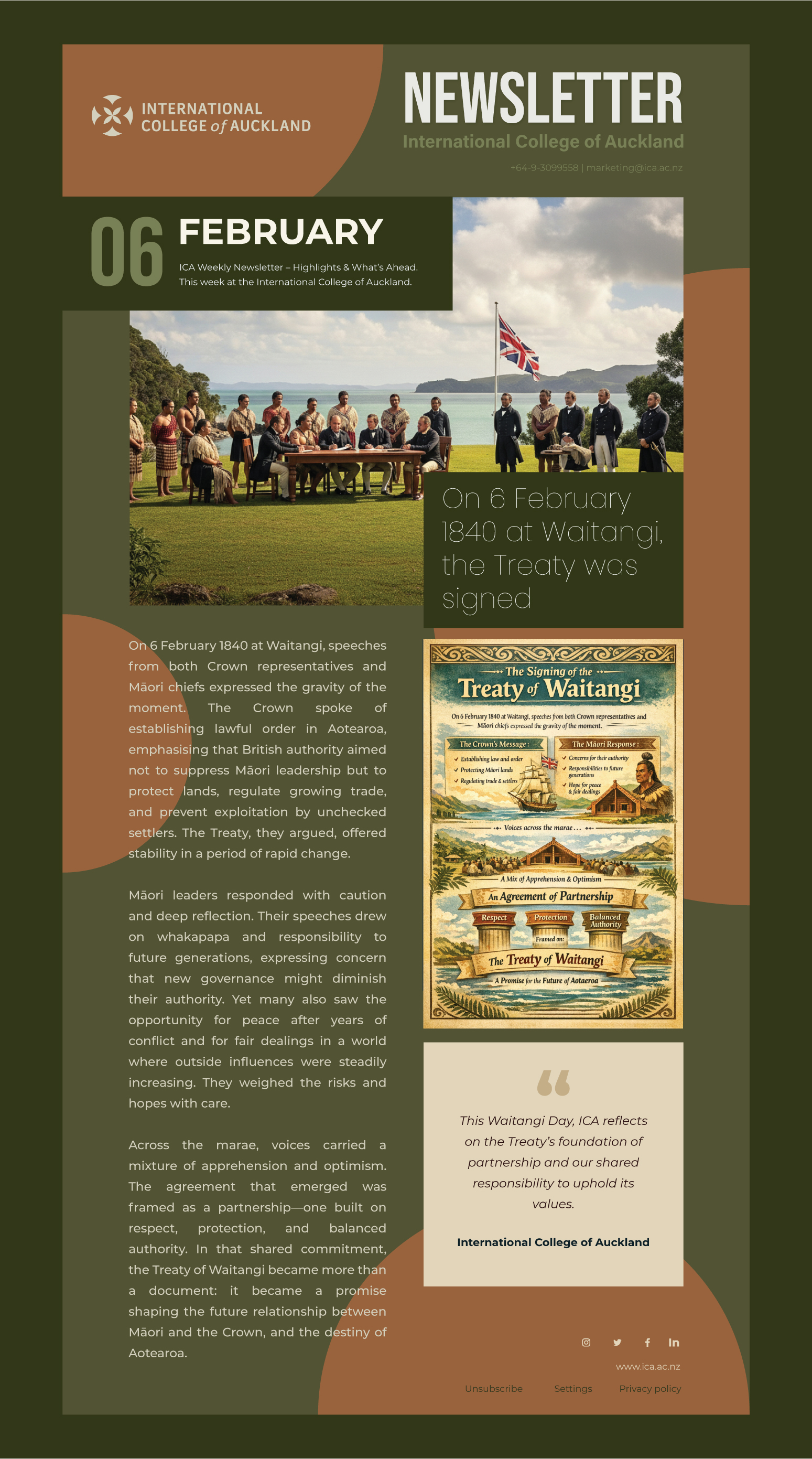
On 6 February 1840 at Waitangi, the Treaty was signed
On 6 February 1840 at Waitangi, speeches from both Crown representatives and Māori chiefs expressed the gravity of the moment. The Crown spoke of establishing lawful order in Aotearoa, emphasising that British authority aimed not to suppress Māori leadership but to protect lands, regulate growing trade, and prevent exploitation by unchecked settlers. The Treaty, they argued, offered stability in a period of rapid change. Māori leaders responded with caution and deep reflection. Their speeches drew on whakapapa and responsibility to future generations, expressing concern that new governance might diminish their authority. Yet many also saw the opportunity for peace after years of conflict and for fair dealings in a world where outside influences were steadily increasing. They weighed the risks and hopes with care. Across the marae, voices carried a mixture of apprehension and optimism. The agreement that emerged was framed as a partnership—one built on respect, protection, and balanced authority. In that shared commitment, the Treaty of Waitangi became more than a document: it became a promise shaping the future relationship between Māori and the Crown, and the destiny of Aotearoa.